
A looming global storm
In an uncertain market landscape, an unfolding trade war is impacting heavily on the outlook, potentially pushing the global economy into recession in the near term, and permanently reshaping trade and capital flows over the longer term.
Fright and flight
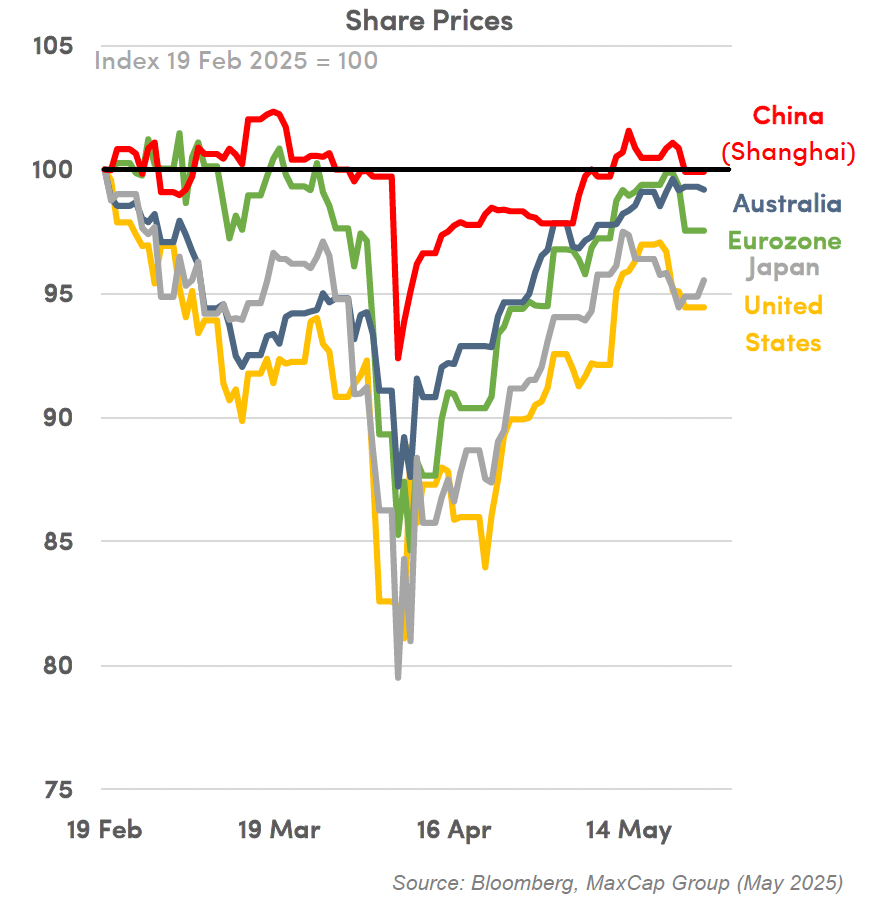
Capital markets around the world have reacted abruptly to this outlook, with sharp pullbacks in share and bond prices, along with big jumps in market volatility. There is nuance in this market, with some regions (like the US) being more harshly affected.
Bracing for impact
As with prior cycles, offshore shocks will have local impacts. Higher US tariffs will slow export demand for both China and Australia. Arguably, the larger impacts will come through financial channels, given reduced wealth and diminished confidence.
Timely shock absorbers
In previous downturns, there were well‑honed shock absorbers at work in Australia. Lower rates would boost domestic sectors. A weaker currency would provide a competitiveness boost for exporters. Most of these shock absorbers are at work again.
Finding a harbour in rough seas
For investors, the lack of portfolio diversification is particularly concerning. In 2025, much like 2022, the traditional mix of stocks and bonds is not providing adequate portfolio stability. Investors need to look elsewhere for shelter in a rough storm.
Finding your way
More than ever, investors are looking more broadly to rebuild diversification and sustain returns. Portfolios are reallocating from public to private markets and from equity to debt exposures. Private credit remains well placed to offer that resilience.